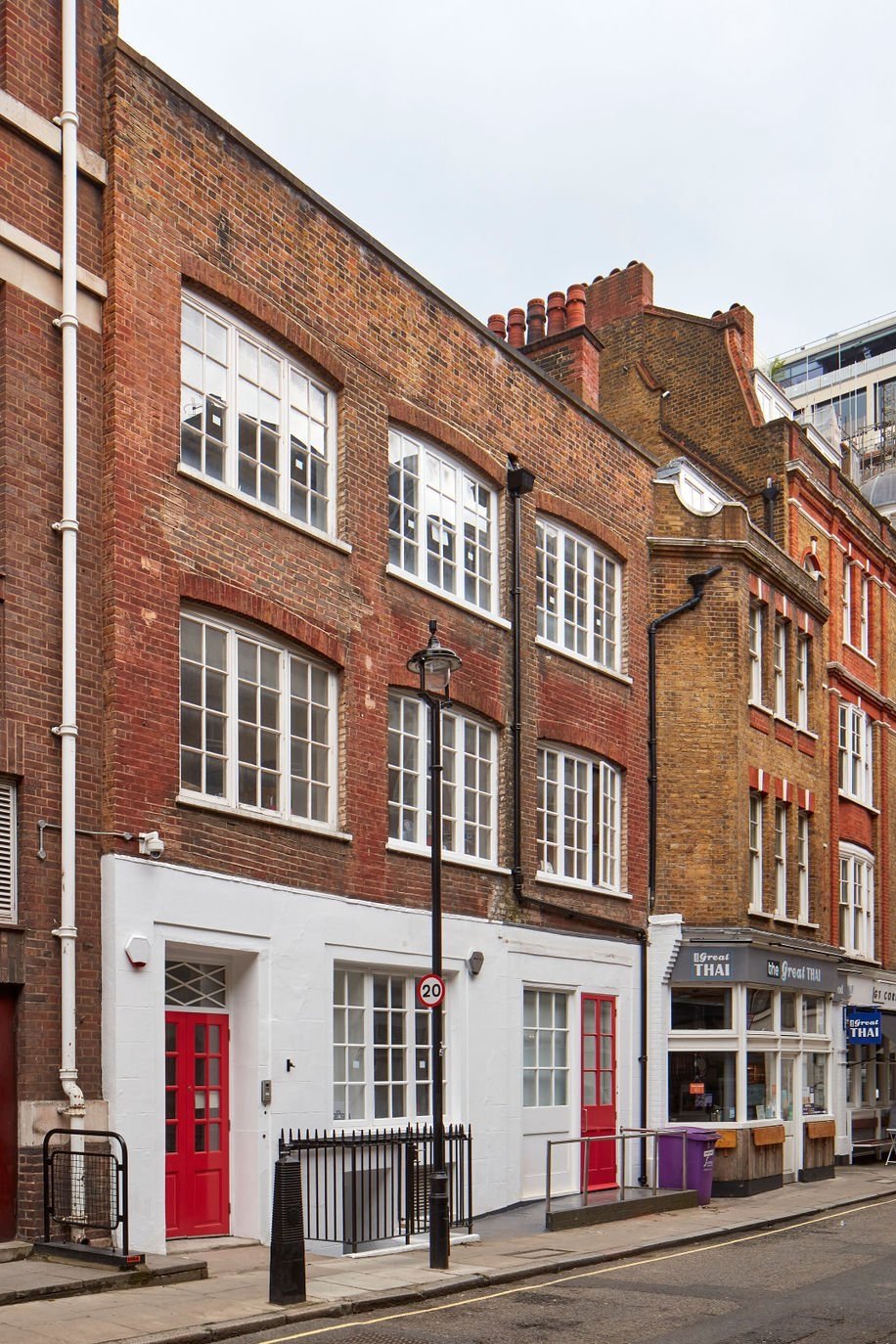
We have many new neighbours, some sell coffee, others sell outlandish food from around the globe.
But there is something that we are particularly excited about because it reaches out to our inner extroverts and takes us back to days of school plays and trips to the theatre.
This exciting new neighbour of ours is the Soho Poly – which before you ask, isn’t in Soho, but is of course in Fitzrovia, next to the LDG office on Riding House Street.
But this isn’t a wholly new concept to the area. In fact, the Soho Poly played an important role in the West End’s theatrical landscape, amplifying underrepresented voices in the 20th century.
The Birth of Lunchtime Theatre
In the heart of Fitzrovia, nestled in the basement of the University’s Riding House Street building, there existed a theatrical gem that would, for almost two decades, redefine the landscape of British theatre. From 1972 to 1990, the Soho Poly Theatre was an institution of national importance, dedicated to democratising the arts and giving a platform to voices which had long been silenced. This humble venue pioneered the concept of lunchtime theatre, served as a creative crucible for emerging talents, and left an indelible mark on the world of drama.
The Soho Poly Theatre was the brainchild of a group of visionaries who sought to make theatre more accessible to the masses. Their solution? Lunchtime theatre. These shorter, more affordable productions allowed office workers, students, and anyone with a free hour to escape into the world of drama during their lunch breaks. This novel concept not only filled a cultural void but also democratised access to the arts, ensuring that theatre was no longer a pastime reserved for the elite.
A Home for Diverse Voices
One of the most remarkable aspects of the Soho Poly Theatre’s legacy is its unwavering commitment to amplifying underrepresented voices. In an era when the theatre world was predominantly male dominated, the Soho Poly became a breeding ground for female playwrights and directors. Notable figures like Timberlake Wertenbaker and Caryl Churchill honed their craft here, paving the way for future generations of female theatre-makers.
But the theatre’s inclusivity didn’t stop there. It was also a haven for LGTBQ+ and BAME (Black, Asian, and Minority Ethnic) theatre-makers. It provided a platform for stories and experiences that had long been side-lined by mainstream theatre. Figures like Simon Callow and Hanif Kureishi found their voices at the Soho Poly, creating ground-breaking works that resonated with audiences who had previously felt invisible in the theatrical landscape. The Soho Poly was more than just a venue; it was a catalyst for change and an advocate for voices that needed to be heard.
Soho Poly: The Shift to Soho Theatre
In 1990, the Soho Poly Theatre bid farewell to Riding House Street and transformed into the Soho Theatre on Dean Street. This transition marked the end of an era, as the original home was left abandoned, seemingly forgotten by the very industry it had helped reshape. The new Soho Theatre continued to thrive and achieve great success, but in the process, the trailblazing history of the Soho Poly Theatre seemed to fade into the background.
Until recently.
In 2012, the space was rediscovered by Dr Matthew Morrison, a playwright and Head of Creative Writing at Westminster University. Since its rediscovery, the university has hosted a number of events including pop-up festivals, poetry reading and exhibitions. This started the revival of the Soho Poly, and following the success and impact of these events, an extensive restoration programme has started to return the theatre to its former glory.
It is anticipated to reopen at the end of 2023 / early 2024 and we for one cannot wait to see the Soho Poly thriving in Fitzrovia once again.
Photo Credit: Rock Townsend

